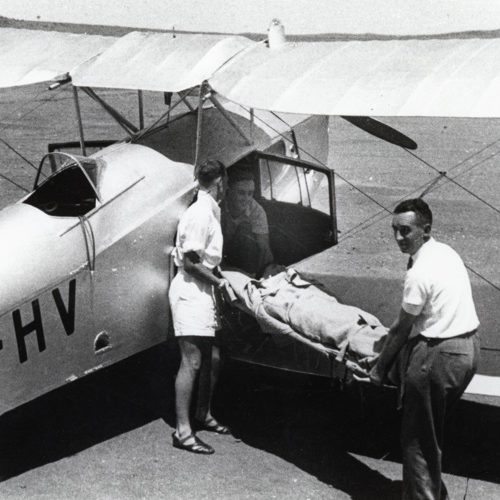
The Flying Doctor principle
The first Flying Doctor took off in Australia in 1928: a physician who flew out to reach people no one else could get to.
I apply the same principle to organizations. I go wherever things are stuck, in Asia, Europe or elsewhere, at a remote site or at headquarters, to treat first what keeps an organization alive: its people. Most blockages don't come from tools or procedures, but from what happens between people. A role that isn't clearly understood, information that doesn't flow, a manager who is struggling, a team that has stopped trusting each other. These causes don't show up on any standard dashboard. That's exactly where I go looking for them.
Why now
This is not a hunch. The numbers confirm it.
70% of large-scale transformations fail to meet their objectives, according to McKinsey.
20% — only one in five employees worldwide say they are engaged, the lowest level since 2020 (Gallup, 2026).
54% of performance differences between organizations are explained by their health: their ability to align, execute and renew (McKinsey).
The leading operational excellence frameworks, from Toyota-inspired Lean to the European EFQM model, reach the same conclusion: without people, tools don't hold. That is exactly where I step in.
Sources: McKinsey & Company; Gallup, State of the Global Workplace 2026.
Three situations where I can help
A team, department or site that isn't moving as fast as planned
Launch, growth, reorganization, new site: the resources are there, but the results are slow to come. I identify what's holding the teams back and help them pick up speed.
An organization that isn't working, with no clear cause
Tensions, delays, turnover, decisions that go nowhere, and dashboards that explain nothing. I look for the real cause, where no one is looking.
A safety or security setup you're not sure about
Procedures are in place, but employee protection remains uncertain on the ground. I audit how your safety and security functions actually work, the gap between what's planned and what really happens, and the human factor that makes the difference.
L'humain d'abord, sans jamais le séparer du reste
People
Behaviors, motivation, leadership, decision-making, trust, resistance to change.
Relationships
Communication, cooperation between teams, the manager-team relationship, tensions, what goes unsaid.
The system
Processes, roles and responsibilities, interfaces between departments, information flow, tools, KPIs.
Who I am
For more than 25 years, I have built and led organizations from the ground up: a sustainable construction company with nearly €5M in revenue and 25 employees, and a training center that grew to 9 sites in France and abroad. I have worked in 7 countries, in stable settings as well as remote or unstable ones. What I bring is simple: I understand quickly how an organization really works, and I help it work better.
Two ways to work together
Working alongside you: as a consultant, interim manager or on a specific mission, when you need an outside perspective, a sharp diagnosis or hands-on operational leadership.
Joining your organization: in a leadership or senior operational role, to commit for the long term, structure, transform and grow.
Based in Southeast Asia — highly mobile — open to relocation.
Why I do this work
They say you should never cut corners on two things: your shoes and your mattress, because you spend most of your life in one or the other. I would add a third: your work. It is where we spend most of our waking hours, and when work goes wrong, it affects everything else.
My role is to make that place work: remove the friction, help people find their place, and let the organization deliver its full potential. Because a company that takes care of the people who run it also creates the conditions for its own performance.
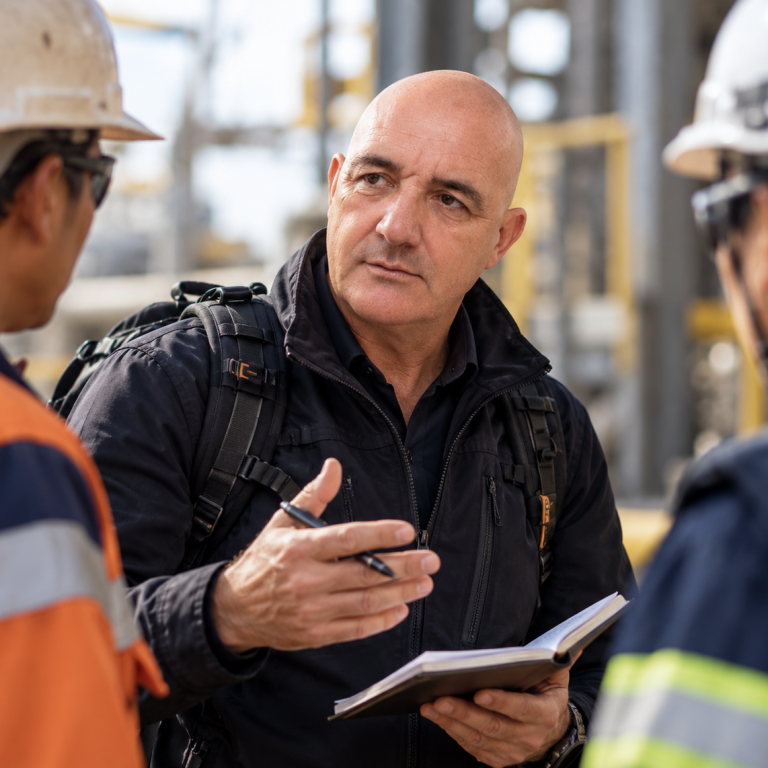
Reading people as well as organizations
For more than twenty-five years, I have led teams, trained thousands of people and observed how they behave in demanding, sometimes extreme situations. It has given me a skill my clients quickly notice: understanding fast who does what, who is blocking what, and why.
I spot friction points where others only see delays. The devil is in the details, and the details are often human.
My approach also adapts to the context: what works in one country, culture or company doesn't necessarily work somewhere else. There is no one-size-fits-all model.
The diagnosis
I come on site: observing how things really work, interviewing people from frontline staff to senior management, analyzing interfaces and friction points. You receive a clear debrief: the real causes, both human and organizational, and a prioritized action plan.
The intervention
I implement the actions with your teams: on-the-ground adjustments, coaching for managers and executives, testing and fine-tuning until the results are there. I don't stop at the report.
The duration depends on the size of the organization and the scope: from a few days for a single team to several weeks for a larger organization.
My method: Observe → Question → Connect → Imagine → Test → Adjust
A consultant's perspective, an operator's commitment
Some situations call for a diagnosis, others for implementation. Most of the time, they need both. The Flying Doctor brings these two stages together: a senior professional who understands quickly, stays alongside your teams during implementation, and hands over once the organization is running smoothly.
Depending on your needs, I work on one-off missions, longer-term support or interim management.
One point of contact, from start to finish
Field work and people, not a hundred-page report
A human reading as much as an operational one
Used to international, remote or unstable settings
References
Multico – 18-month engagement
Management could see that the company wasn't progressing as it should, particularly in business development, without being able to pinpoint the cause.
I observed how the organization really worked: processes, interfaces between teams, dependencies, and above all behaviors and relationships between people. That is where the main obstacles were, invisible in the KPIs.
These findings were turned into concrete actions, followed up over time with management.
They also trusted me
Eramet • Heineken • Lime Core • Willkie Farr & Gallagher
On missions covering training, operational readiness, human factors, HSE and risk management.
BIOHOME, sustainable construction
Starting point: a strong belief in sustainable construction, at a time when the market was still emerging. No company, no team, no clients: everything had to be built.
Outcome: a company with nearly €5M in revenue and 25 employees, including an in-house design office, a prefabrication unit and site teams. National Stars & Métiers Award for Global Innovation Strategy.
A resilience and risk management training center
Starting point: a passion, and an activity that barely existed in this form in France. The entire training system was built from scratch.
Outcome: 16 years of operation, 5 sites in France, 4 destinations abroad, teams of instructors recruited and trained, and thousands of participants observed in demanding situations. That is where I learned to read human behavior under pressure.
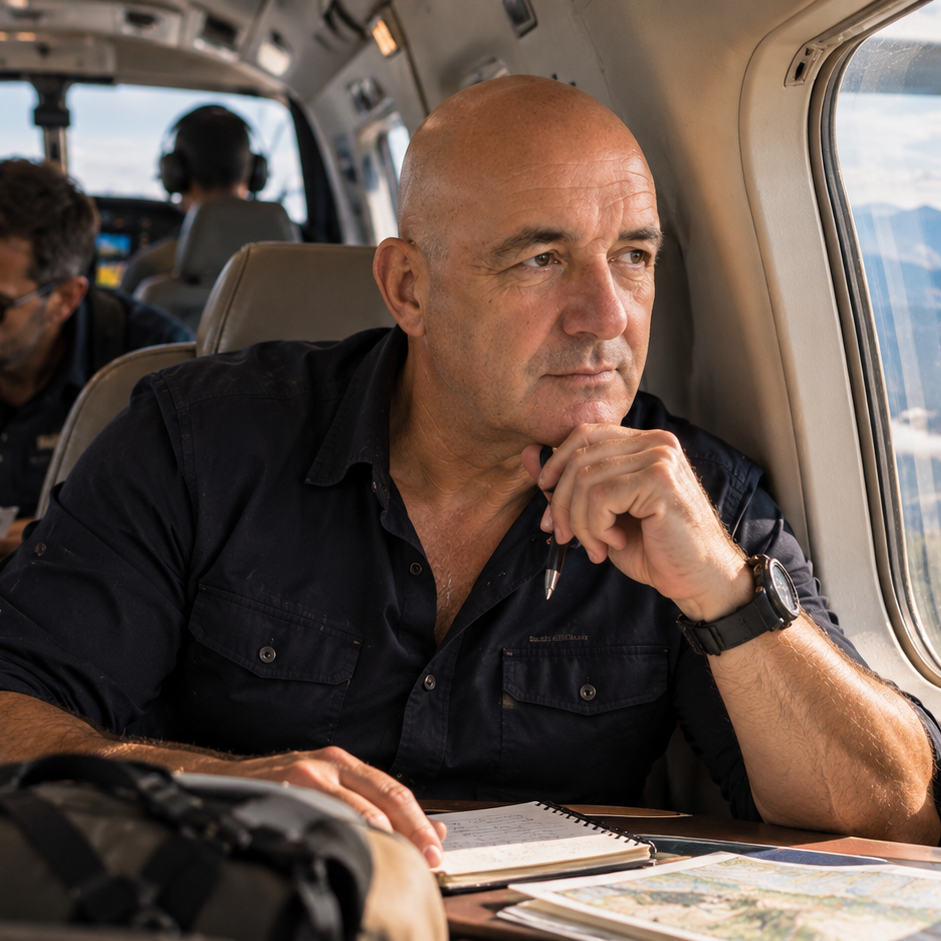
Why I do this work
I always say there are three essentials for a good life: good shoes, a good mattress and rewarding work.
By day, you're in your shoes. By night, on your mattress. And in between, there's work. It takes up a large part of our waking life. When you're not doing well at work, it's hard to be doing well in life.
My role: to make the place where we spend so much of our lives rewarding, to remove the friction, and to help the organization deliver its full potential.
Because a company that takes care of the people who keep it running also creates the conditions for its own performance.
Mon adaptation : « gratifiant » devient « rewarding », le mot le plus naturel en anglais pour un travail qui apporte de la satisfaction. Le reste suit ton texte de près, car la formulation passe bien en anglais.
Frequently asked questions
How long does an engagement last?
It depends on the size of the organization and the scope. We define it together during our first conversation.
Are you a coach or a consultant?
Both, serving the same goal: performance. I analyze the organization like a consultant, support people like a coach, and act on the ground like an operator.
Where do you work?
Based in Southeast Asia, I work across Asia-Pacific, in Europe and beyond, including at remote sites and in challenging environments.
What if the issue is sensitive?
It often is. Interviews remain confidential, and findings are reported directly to senior management.
Will this take up a lot of my teams' time?
No. I observe how things actually work and conduct short interviews, without interrupting operations.
How much does an engagement cost?
A quote is prepared based on the scope, after an initial no-obligation conversation.

A team spinning its wheels? A situation no one can explain?
Let's talk. The first conversation comes with no obligation.